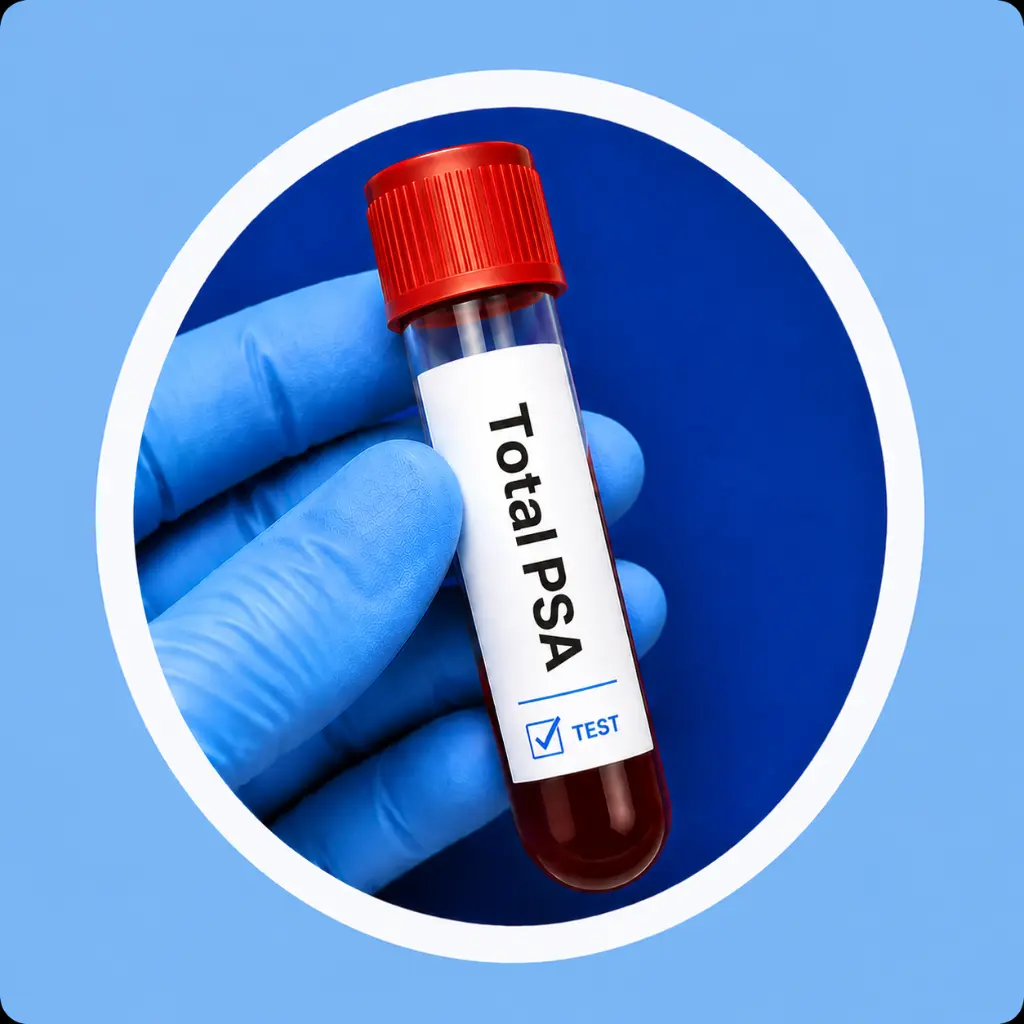
The Total PSA (Prostate-Specific Antigen) test is a blood test that measures the level of prostate-specific antigen, a protein produced by the prostate gland in men. PSA is normally present in small amounts in the bloodstream, and measuring its level helps assess the health of the prostate gland. Changes in PSA levels can indicate inflammation, enlargement, or other conditions affecting the prostate.
This test is commonly recommended when a person experiences symptoms such as difficulty urinating, frequent urination (especially at night), weak urine flow, pelvic discomfort, blood in urine, or when a doctor wants to evaluate prostate health as part of routine screening. It helps diagnose and monitor conditions such as benign prostatic hyperplasia (BPH), prostatitis (inflammation of the prostate), prostate enlargement, and may assist in the early detection and monitoring of prostate cancer. The Total PSA test is widely used for prostate health assessment, ongoing monitoring, and guiding further medical evaluation when abnormal PSA levels are detected.